Comprehensive Developmental Benefits for Growing Children
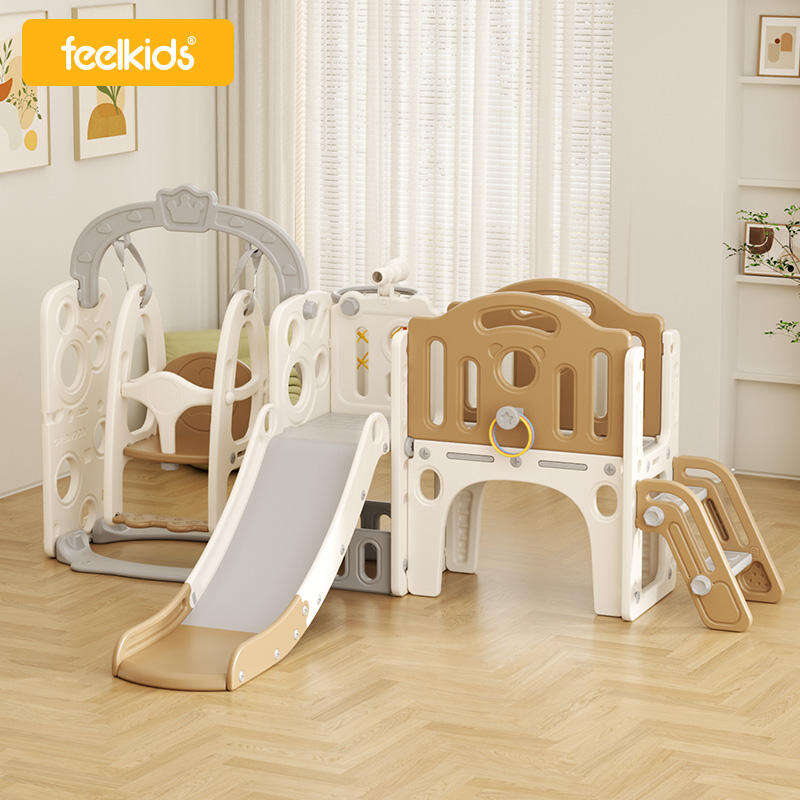
The little tikes infant slide provides a sophisticated platform for multiple aspects of child development, creating learning opportunities that extend far beyond simple recreational activity. Physical development accelerates through gross motor skill enhancement as children navigate the climbing sequence, improving muscle strength, coordination, and spatial awareness essential for future physical activities and sports participation. Balance development occurs naturally during climbing and sliding activities, as children must constantly adjust their body position to maintain stability while moving through three-dimensional space, creating neural pathways that support lifelong physical coordination. The little tikes infant slide encourages proprioceptive development, helping children understand their body position relative to their environment, a crucial skill for preventing falls and navigating complex physical challenges as they grow. Cognitive development emerges through problem-solving activities as children determine optimal climbing strategies, understand sequential thinking required for safe play, and develop cause-and-effect reasoning through repeated interactions with the equipment. Social skill development flourishes during group play sessions where children must negotiate turn-taking, develop sharing behaviors, and learn cooperative play strategies that form foundations for successful peer relationships throughout childhood. Confidence building occurs incrementally as children master increasingly challenging aspects of slide use, from initial hesitant climbs to confident, independent play that demonstrates growing self-assurance and willingness to tackle new challenges. The little tikes infant slide promotes sensory integration through varied textures, visual stimulation from bright colors, and vestibular input from sliding movements that help children process sensory information more effectively. Language development benefits emerge during social play as children communicate with peers, describe their experiences, and develop vocabulary related to spatial concepts, emotions, and physical activities. Risk assessment skills develop as children evaluate climbing challenges, understand consequences of different actions, and make safety-conscious decisions that transfer to other life situations requiring careful judgment and planning.


 EN
EN