
 EN
EN


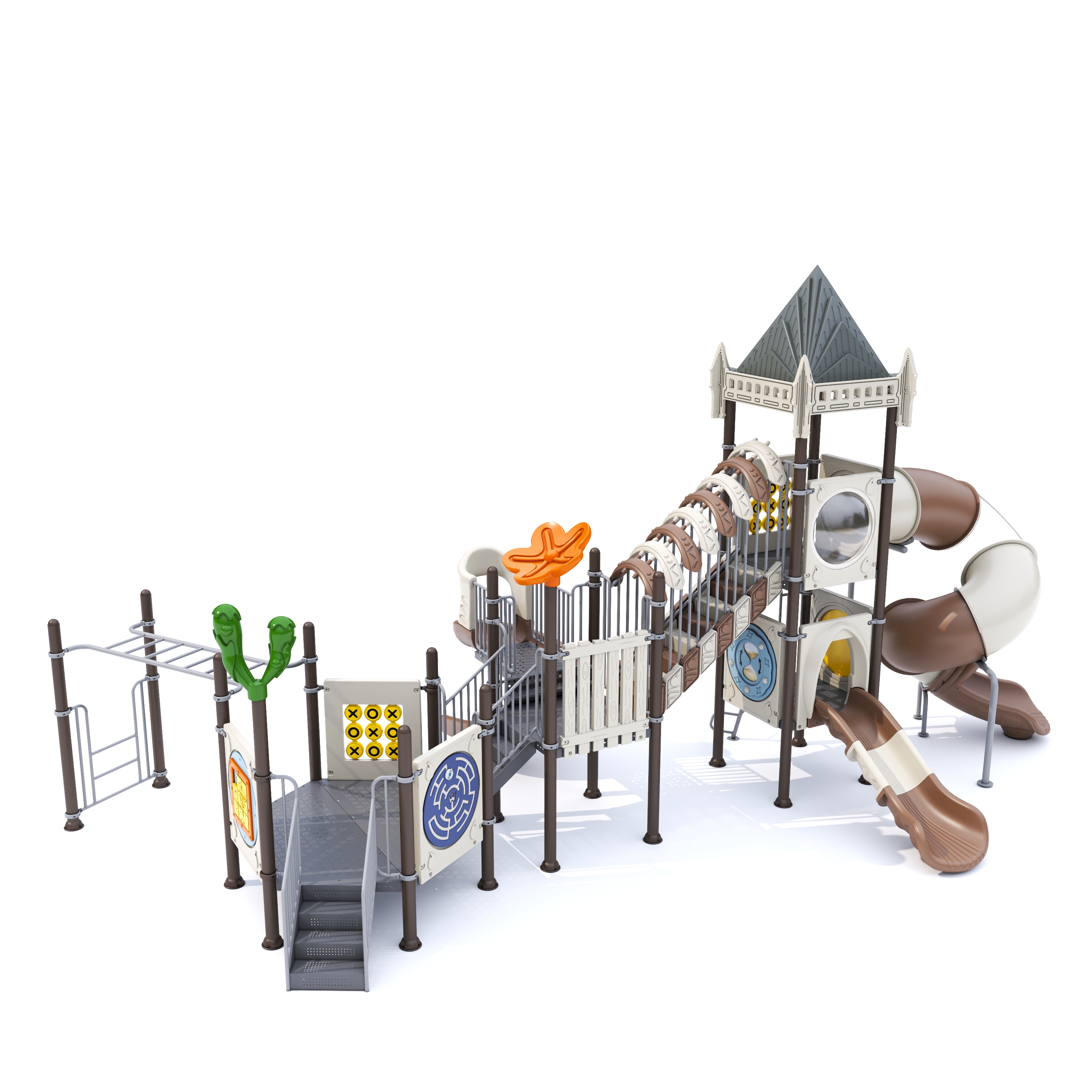
Designing a kids playground is far more complex than simply installing a few swings and slides in an open space. Every element, from equipment height and material selection to spatial layout and safety surfacing, must be carefully calibrated to match the developmental stage of the children who will use it. A well-designed kids playground does not apply a one-size-fits-all approach; instead, it considers the cognitive, physical, and social needs of specific age groups while also accounting for the unique demands of the environment where it will be installed.
Understanding how a kids playground must adapt to both age and usage context is essential for schools, park administrators, and commercial facility managers who want to provide safe, engaging, and long-lasting play environments. This article explores how playground design principles shift across different developmental stages and how location-specific requirements, such as those for schools, public parks, or amusement venues, introduce additional design considerations that can significantly shape the final outcome.
Developmental Stages and Their Influence on Kids Playground Design
Toddlers and Early Childhood Play Spaces
Children between the ages of six months and two years are at the earliest stages of motor skill development. A kids playground designed for this age group must prioritize low-to-the-ground equipment, enclosed play pods, and sensory-stimulating elements. Crawl tunnels, soft rocking animals, sand and water tables, and gentle ramps fall within the design vocabulary appropriate for this cohort. The emphasis is on exploration without risk of significant falls.
Safety surfacing is especially critical at this stage. Rubber tiles, poured-in-place rubber, and engineered wood fiber must extend well beyond the footprint of any equipment to account for unpredictable toddler movement. Enclosures or soft barriers that define the toddler zone within a larger kids playground are common best practice in professionally designed spaces. This separation ensures that older children moving quickly through the space do not inadvertently collide with the youngest users.
Equipment colors, textures, and sound-producing features within this zone also serve a developmental purpose. Stimulating multiple senses simultaneously supports early brain development and keeps young children engaged without requiring advanced physical coordination. When planning a kids playground for toddlers, caregivers and designers should always ensure adult supervision sightlines are unobstructed throughout the entire zone.
Preschool and Kindergarten Age Groups
Children aged three to five are rapidly developing gross motor skills, balance, and early social behaviors. A kids playground designed for this bracket introduces more dynamic elements such as low slides, balance beams, spring riders, and climbers with moderate gradients. The equipment should challenge children to stretch their abilities while remaining within safe fall height thresholds, typically no more than 1.5 meters at this stage.
Social play begins to emerge strongly during this period. Design features that encourage cooperative activity, such as small playhouses, multi-position spinners, and group swing frames, become increasingly valuable. A kids playground intended primarily for preschool-age children benefits from incorporating semi-enclosed spaces where small groups can engage in imaginative role play, as this mirrors the natural social learning that takes place at this developmental stage.
Transitions between equipment pieces should be smooth and logical, reducing the risk of falls at connection points. Handrails, low decks, and simple bridge structures help preschoolers move through the play environment with growing confidence. When a kids playground serves a school environment, these design choices also support teachers who need to manage and observe groups of children simultaneously across the play area.
Middle Childhood Design Requirements for School-Age Kids
Physical Challenge and Skill-Building for Ages 5 to 12
School-age children between five and twelve years represent the most active and physically demanding audience for any kids playground. This group requires equipment that challenges strength, coordination, problem-solving, and risk assessment simultaneously. Larger multi-tower structures, overhead ladders, climbing walls, higher slides, and rope courses are all appropriate for this cohort. Equipment heights can extend significantly higher, provided that safety surfacing meets depth requirements relative to the fall height.
The kids playground design for school-age users must also account for the higher frequency and intensity of use. Equipment frames in this category are typically constructed from galvanized steel pipe or powder-coated heavy-gauge steel to withstand constant loading, vibration, and the general wear associated with large numbers of active children over many years. Plastic components used for slides, panels, and platforms must be UV-stabilized and impact-resistant to maintain safety and appearance through years of heavy use.
Spatial planning for this age group must also consider traffic flow. At peak use times such as school recess, dozens of children may be on a single kids playground structure simultaneously. Entry and exit points should be plentiful and logically distributed to prevent bottlenecks. Ground-level activities such as hopscotch patterns, running tracks, or balance-stepping stones around the main structure keep children engaged even when the main equipment is at capacity.
Inclusive Design Considerations Within Age-Appropriate Zones
Inclusive design is not limited to any single age group. A well-conceived kids playground at the school-age level must ensure that children with varying physical abilities can participate meaningfully. Accessible ramps, transfer stations at deck level, sensory panels, and ground-level play elements that can be used from a wheelchair all contribute to a truly inclusive environment.
The challenge in this design tier is integrating inclusive elements without creating a segregated experience. Ideally, a kids playground structured around inclusive principles places accessible routes directly within the main flow of activity so that all children move through the same play journey. This requires careful coordination between equipment layout, surfacing choices, and structural transitions.
School environments in particular benefit from inclusive design because they serve legally mandated requirements in most jurisdictions while also promoting empathy and social cohesion among students. Facility managers commissioning a new kids playground for a school setting should work with designers who understand both the regulatory requirements for accessibility and the practical realities of high-density daily use.
Usage Context and How Location Shapes Kids Playground Requirements
School Playgrounds and Educational Intent
A kids playground installed within a school campus operates under a specific and highly regulated usage context. The primary purpose is to provide structured physical activity and unstructured social play during defined time windows. Durability is paramount because equipment is used by large groups of children every day throughout the academic year. Maintenance access, ease of inspection, and component replaceability are all practical priorities that influence equipment selection.
School kids playground designs often integrate educational themes into their aesthetic and functional elements. Panels that feature number sequences, letters, maps, or nature illustrations add a subtle learning dimension to the play experience. Surfacing layouts can include counting patterns or directional markings that naturally integrate with curriculum goals. This overlap between play and learning aligns with modern pedagogical philosophy and can influence procurement decisions when administrators evaluate competing design proposals.
Fencing, entry gate positioning, and sightlines for supervising teachers are non-negotiable layout considerations in a school kids playground. Zones must be clearly defined to prevent conflicts between age groups sharing a common outdoor area. When older and younger children are expected to use the same space at different times, modular zoning and dual-age equipment configurations offer a practical solution that avoids the need for separate fully-equipped play areas.
Public Parks and Community Playground Dynamics
A kids playground installed within a public park serves an entirely different and far more unpredictable usage pattern. Users may range from toddlers supervised by a single parent to groups of school-age children visiting without structured adult oversight. The equipment must therefore span a broader developmental range within a single cohesive design, and the layout must account for the simultaneous presence of multiple age groups at any given time.
Vandalism resistance, weather durability, and low maintenance burden take on heightened importance in the public park context. A kids playground in a public space may go extended periods without formal inspection, so equipment hardware must be tamper-resistant, graffiti-resistant surfaces are preferred, and structural elements should require minimal periodic intervention to remain safe. Materials such as HDPE plastic, stainless steel hardware, and powder-coated galvanized frames are standard choices for park environments.
Shade structures, seating for caregivers, and clear visual openness are design features that make a public kids playground more functional for the families who use it. A shaded seating perimeter allows caregivers to supervise comfortably during warmer months, which directly increases the duration and frequency of visits. This human-centric thinking around the caregiver experience is increasingly recognized as a core component of effective public playground design rather than an afterthought.
Amusement and Commercial Kids Playground Environments
Commercial venues such as family entertainment centers, theme parks, and retail destinations operate a kids playground with a fundamentally different objective compared to schools or parks. In these settings, the play environment serves as a revenue-generating attraction, and the design must deliver high visual impact, extended dwell times, and memorable experiences that differentiate the venue from competitors. Theming, large-scale structures, and high-throughput equipment configurations are characteristic of commercial-grade designs.
A commercial kids playground must also satisfy operational requirements that do not apply to public installations. Staff safety monitoring, age-height restrictions for certain equipment zones, daily cleaning and sanitation protocols, and rapid response maintenance systems are all part of the operational reality. Equipment manufacturers supplying commercial environments typically offer modular systems that can be expanded over time as the venue grows or rebranded as thematic preferences evolve.
Capacity management is another design-level consideration unique to commercial kids playground environments. Queue flow, entry control points, and zoning by age or height tier must be built into the spatial layout from the outset rather than retrofitted after installation. When managed effectively, this level of design rigor ensures consistent safety standards even at peak visitor volumes.
Material Selection and Safety Standards Across Age Groups
Structural Materials and Their Role in Age-Appropriate Design
The structural integrity of any kids playground must be matched to both the weight load of its intended users and the intensity of their interaction with the equipment. For younger children, lighter structural profiles and smooth, rounded surfaces minimize injury risk during low-energy play. For school-age and older users, galvanized steel pipe frames provide the load-bearing capacity and long-term stability required to support dynamic climbing, swinging, and impact loading safely over years of continuous use.
Plastic components, particularly those used for slides and deck panels, must conform to relevant standards for UV resistance and surface temperature. A kids playground in a warm or high-sun environment requires materials that do not reach dangerous surface temperatures during peak solar hours. High-density polyethylene plastic with UV stabilizers is the industry standard for deck panels and slide channels in outdoor environments, as it remains dimensionally stable and safe across a wide temperature range.
Connecting hardware is often the most critical and least visible component in any kids playground. Stainless steel bolts, anti-entrapment nut caps, and recessed hardware configurations prevent both mechanical failure and clothing or finger entrapment hazards. Regular inspection protocols should specifically target hardware points, especially on high-use equipment elements such as swing hangers, slide anchors, and climber frame joints.
Safety Surfacing Standards and Fall Zone Logic
Fall zone surfacing is one of the most regulated and technically specific aspects of any kids playground installation. The required depth and type of surface material is directly linked to the maximum fall height of the equipment, which in turn is determined by the age group the structure is designed for. Toddler zones with low equipment require shallower surfacing compared to school-age structures where deck heights may reach 2.5 meters or more.
Loose-fill materials such as engineered wood fiber and rubber mulch offer flexible and cost-effective solutions for many kids playground environments, but they require regular maintenance to maintain their protective depth over time. Poured-in-place rubber and rubber tile systems offer lower maintenance burden and accessibility advantages, making them increasingly preferred in environments where inclusive design and reduced upkeep are priorities.
Local and international standards such as EN 1176 in Europe, ASTM F1292 in North America, and AS 4685 in Australia all provide specific benchmarks for acceptable surfacing performance at defined fall heights. Procurement teams specifying a kids playground in regulated markets must ensure that surfacing selections are fully compliant with the applicable standard in their jurisdiction, and that compliance documentation is available as part of the installation record.
FAQ
What is the most important factor when designing a kids playground for different age groups?
The most important factor is matching equipment scale, challenge level, and safety features to the developmental capabilities of the intended age group. A kids playground designed for toddlers must prioritize low heights, sensory engagement, and enclosed safe zones, while one designed for school-age children must offer physical challenge, durable structures, and sufficient capacity for group use. Blending the two without proper zoning creates genuine safety risks and reduces the quality of the play experience for all users.
How does the usage environment affect kids playground equipment selection?
The installation environment directly shapes material choices, structural specifications, and layout priorities. A kids playground in a school setting must prioritize durability for daily high-density use and compliance with educational facility standards. A park environment requires vandalism resistance and low-maintenance materials. A commercial venue demands high visual impact, modular scalability, and operational features such as queue management and age-appropriate zoning. Each context calls for a distinct design approach even if the same age group is being served.
How often should a kids playground be inspected for safety?
Most industry guidelines recommend routine visual inspections of a kids playground at least once a week, with formal operational inspections conducted monthly and a comprehensive structural inspection performed annually by a qualified playground safety inspector. High-use environments such as school playgrounds or commercial venues may require more frequent checks due to the greater wear placed on equipment components. Inspection records should be maintained as part of an ongoing safety management program.
Can a single kids playground structure serve multiple age groups simultaneously?
Yes, but only if the structure is designed with deliberate age-specific zoning from the outset. A well-planned kids playground can incorporate a toddler-safe lower zone with enclosed features alongside a higher-challenge zone for older children, provided that the zones are physically separated by clear design boundaries or barriers. Without this intentional zoning, combining age groups on a single structure introduces safety hazards because the movement patterns and physical capabilities of different age groups are fundamentally incompatible in an unmanaged shared space.
Table of Contents
- Developmental Stages and Their Influence on Kids Playground Design
- Middle Childhood Design Requirements for School-Age Kids
- Usage Context and How Location Shapes Kids Playground Requirements
- Material Selection and Safety Standards Across Age Groups
-
FAQ
- What is the most important factor when designing a kids playground for different age groups?
- How does the usage environment affect kids playground equipment selection?
- How often should a kids playground be inspected for safety?
- Can a single kids playground structure serve multiple age groups simultaneously?