
 EN
EN


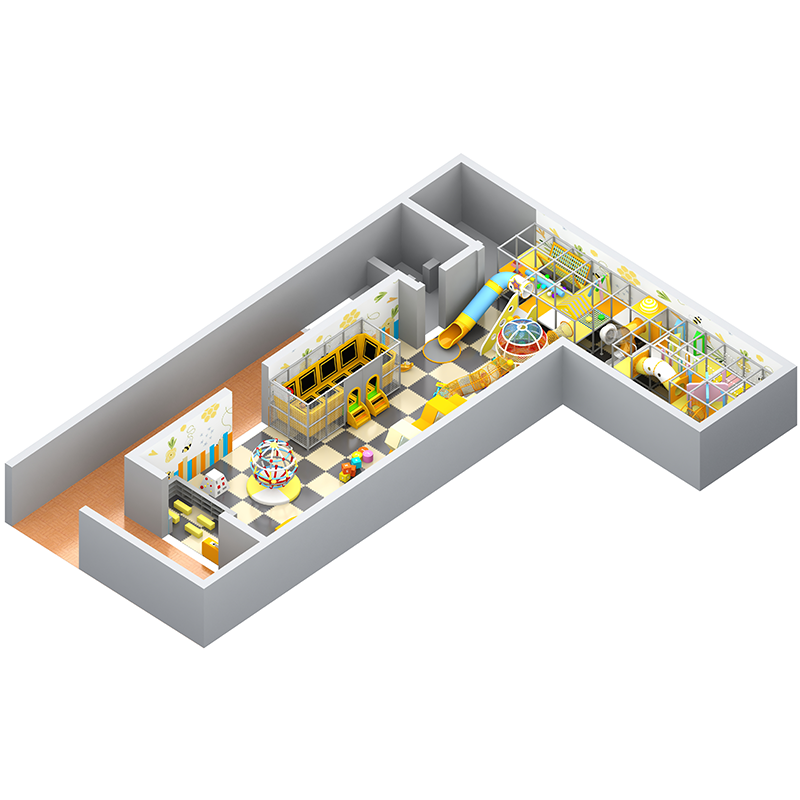
A well-designed kids playground is far more than a collection of slides and climbing frames. It is a carefully engineered environment that shapes how children think, communicate, and explore the world around them. Research in child development consistently shows that the physical structures children interact with during play have a direct and measurable influence on the depth and quality of their imaginative engagement. When a child steps onto a playground, the design of that space either opens doors to creative thinking or quietly limits it.
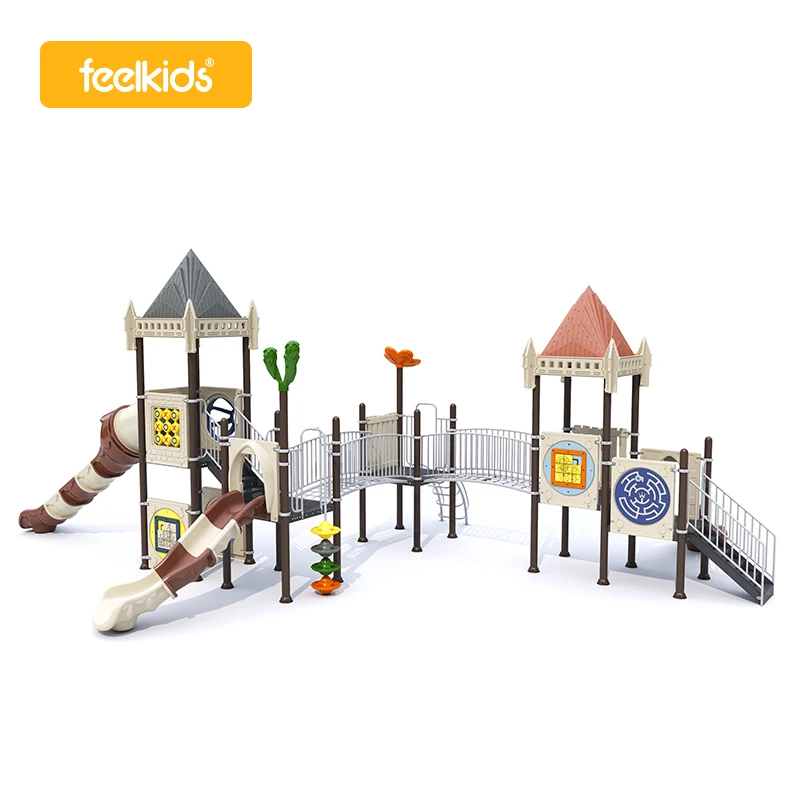
Understanding how kids playground structures influence creative play requires looking beyond the obvious physical benefits of outdoor activity. The shapes, heights, textures, and spatial arrangements of playground equipment all send signals to a child's developing brain. These signals trigger storytelling, role-playing, problem-solving, and collaborative fantasy — the very foundations of imaginative play. For parents, educators, and facility planners, this understanding is essential when selecting or designing a kids playground that truly serves children's developmental needs.
The Connection Between Physical Structure and Imaginative Thinking
How Spatial Design Activates the Imagination
The layout of a kids playground communicates possibility. When children encounter a structure with multiple levels, enclosed spaces, bridges, and tunnels, their minds immediately begin constructing narratives. A raised platform becomes a castle tower. A tunnel becomes a secret passage. A climbing net becomes the rigging of a ship. These mental transformations happen naturally and spontaneously when the physical environment provides enough variety and ambiguity to support them.
Playground designers who understand child psychology deliberately incorporate open-ended elements into their structures. Unlike single-purpose equipment that can only be used one way, multi-functional kids playground components invite children to reinterpret their purpose. A curved slide might be a dragon's tail in one game and a waterfall in the next. This flexibility is what separates a truly imaginative play environment from a purely physical one.
The presence of varied heights also plays a significant role. Children who can look down from an elevated platform gain a sense of perspective and agency that fuels storytelling. They become the lookout, the commander, the explorer surveying new territory. This spatial experience is cognitively rich and directly feeds the imaginative narratives children construct during play.
Enclosed and Semi-Enclosed Spaces as Imagination Catalysts
One of the most powerful features a kids playground can offer is the presence of enclosed or semi-enclosed spaces. Playhouses, tunnels, and covered platforms create a psychological sense of separation from the adult world. Within these spaces, children feel free to establish their own rules, roles, and realities. This sense of ownership over a defined space is a critical ingredient for deep imaginative play.
Child development specialists refer to this phenomenon as 'loose boundary play' — where the physical boundary of a small enclosed space gives children the psychological freedom to build elaborate internal worlds. A kids playground that incorporates these features consistently produces richer, longer-lasting imaginative play sessions compared to open, flat equipment arrangements.
Semi-enclosed spaces also encourage small group dynamics. When two or three children share a confined play space, they are naturally prompted to negotiate roles, develop shared storylines, and communicate more deliberately. This social dimension of imaginative play is one of the most valuable developmental outcomes a well-structured kids playground can support.
Structural Variety and Its Role in Sustaining Creative Play
Multi-Activity Structures and Narrative Continuity
A kids playground that combines slides, climbing walls, balance beams, and activity panels within a single integrated structure creates what child psychologists call a 'play narrative environment.' Children do not experience each element in isolation — they move through the structure as if moving through a story. The journey from one component to the next becomes part of the imaginative experience itself.
This narrative continuity is important because it sustains engagement over longer periods. When a kids playground offers only one or two types of activity, children exhaust the imaginative possibilities quickly. But when the structure presents a sequence of varied challenges and spaces, children return repeatedly, each time constructing new stories and scenarios around the same physical elements.
Multi-activity kids playground structures also support mixed-age play, which further enriches imaginative outcomes. Older children naturally take on leadership roles in collaborative fantasy play, while younger children absorb storytelling patterns and social negotiation skills. The physical structure of the playground creates the conditions for this intergenerational creative exchange.
Sensory Elements That Deepen Imaginative Engagement
Texture, color, and interactive panels are often underestimated features of a kids playground, yet they contribute significantly to imaginative play. Brightly colored panels with printed patterns, tactile surfaces, and interactive elements like spinning wheels or musical components give children additional sensory input to incorporate into their play narratives.
A child who can spin a wheel on a kids playground panel might imagine they are steering a spaceship or operating a factory machine. These small interactive details act as imaginative triggers, giving children concrete props around which to build elaborate mental scenarios. The more sensory variety a kids playground offers, the more raw material children have for creative storytelling.
Color psychology also plays a role. Warm, varied color schemes on kids playground structures have been shown to stimulate energy and engagement, while the presence of natural tones can encourage calmer, more contemplative imaginative play. Thoughtful color design is therefore not merely aesthetic — it is a functional tool for shaping the quality of creative play experiences.
Social Dynamics Shaped by Playground Structure
How Design Encourages Collaborative Storytelling
The physical arrangement of a kids playground directly influences whether children play alone or together, and whether their play remains physical or evolves into collaborative storytelling. Structures that include shared spaces — wide platforms, side-by-side slides, or connected climbing routes — naturally bring children into proximity and create opportunities for joint imaginative play.
When children share a kids playground space, they must communicate to coordinate their activities. This communication is the engine of collaborative imagination. One child proposes a scenario, another builds on it, and a third introduces a new element. The physical structure of the playground acts as a shared stage on which this creative collaboration unfolds.
Playground designers increasingly recognize that the social architecture of a kids playground is as important as its physical architecture. Structures that create natural gathering points — a central platform, a meeting space at the base of a slide, a shared activity panel — consistently produce more collaborative and imaginative play than structures that disperse children into isolated activities.
Role-Play Scenarios Enabled by Structural Diversity
Different structural elements of a kids playground enable different categories of role-play. Climbing structures support adventure and exploration narratives. Enclosed spaces support domestic and community role-play. Balance elements support challenge and competition narratives. When a single kids playground incorporates all of these structural types, it becomes a versatile stage for the full range of childhood imaginative scenarios.
This structural diversity is particularly valuable for mixed-gender and mixed-age groups, where children naturally gravitate toward different types of imaginative play. A kids playground that offers only one structural type will inevitably exclude some children's preferred play styles, limiting both participation and creative output.
Facilities that invest in structurally diverse kids playground equipment consistently report higher levels of child engagement, longer play sessions, and more positive social interactions. The return on investment is not just physical fitness — it is measurable cognitive and social development driven by richer imaginative play.
Long-Term Developmental Benefits of Imagination-Supportive Playground Design
Cognitive Growth Through Unstructured Creative Play
The imaginative play that a well-designed kids playground enables is directly linked to long-term cognitive development. When children engage in fantasy play, they practice abstract thinking, causal reasoning, and perspective-taking — all of which are foundational skills for academic and professional success. The kids playground is, in this sense, one of the earliest and most effective cognitive training environments available.
Unstructured creative play on a kids playground also builds executive function skills, including planning, impulse control, and flexible thinking. When children invent and manage their own play scenarios, they are exercising the same mental muscles they will later use for problem-solving, project management, and creative work. The physical structure of the playground is the scaffold on which these mental skills are built.
Educators and child development professionals increasingly advocate for kids playground designs that prioritize imaginative play potential alongside physical challenge. The most effective playgrounds are those that treat cognitive and creative development as equal priorities to physical fitness, resulting in environments that serve the whole child.
Emotional Resilience Built Through Imaginative Play Environments
A kids playground that supports rich imaginative play also contributes to emotional development. When children create and inhabit fictional scenarios, they safely explore emotions, practice empathy, and develop coping strategies. The playground becomes a low-stakes environment where children can rehearse emotional responses to challenging situations through the protective distance of play.
Structures that allow children to take on different roles — leader, follower, helper, challenger — give them experience with a range of emotional positions. This role flexibility, enabled by the structural variety of the kids playground, builds emotional intelligence and social adaptability over time.
For facility planners and parents selecting a kids playground, understanding these long-term emotional benefits reinforces the importance of choosing structures that go beyond basic physical activity. The investment in a well-designed, imagination-supportive kids playground is an investment in children's emotional and social futures.
FAQ
What types of kids playground structures best support imaginative play?
Structures that combine multiple activity types — such as slides, climbing elements, enclosed spaces, and interactive panels — within a single integrated design are most effective at supporting imaginative play. Multi-level platforms, tunnels, and semi-enclosed playhouses are particularly valuable because they give children defined spaces in which to build and sustain creative narratives. A kids playground that offers structural variety consistently produces richer and longer imaginative play sessions than single-activity equipment.
At what age do kids playground structures have the greatest influence on imaginative play?
The influence of kids playground structures on imaginative play is strongest between the ages of three and eight, when children are in the most active phase of fantasy and role-play development. During this period, the physical environment has a direct and significant impact on the complexity and duration of imaginative play. However, well-designed playground structures continue to support creative play well into middle childhood, particularly when they offer enough structural variety to challenge older children.
How does a kids playground differ from a standard play area in terms of creative development?
A thoughtfully designed kids playground differs from a basic play area in that it is intentionally structured to support multiple types of play simultaneously — physical, social, and imaginative. Standard play areas often focus primarily on physical activity through simple swings or single-purpose equipment. A kids playground designed with creative development in mind incorporates spatial variety, sensory elements, and social gathering points that together create a richer environment for imaginative engagement.
Can a kids playground in a small garden space still support creative play effectively?
Yes. Even a compact kids playground can support strong imaginative play if it incorporates structural variety within a small footprint. Multi-activity play centers that combine a slide, climbing wall, activity panel, and small enclosed space within a single unit are specifically designed for garden and smaller outdoor environments. The key is ensuring that the structure offers enough variety and ambiguity to serve as a flexible imaginative stage, regardless of its overall size.
Table of Contents
- The Connection Between Physical Structure and Imaginative Thinking
- Structural Variety and Its Role in Sustaining Creative Play
- Social Dynamics Shaped by Playground Structure
- Long-Term Developmental Benefits of Imagination-Supportive Playground Design
-
FAQ
- What types of kids playground structures best support imaginative play?
- At what age do kids playground structures have the greatest influence on imaginative play?
- How does a kids playground differ from a standard play area in terms of creative development?
- Can a kids playground in a small garden space still support creative play effectively?