
 EN
EN


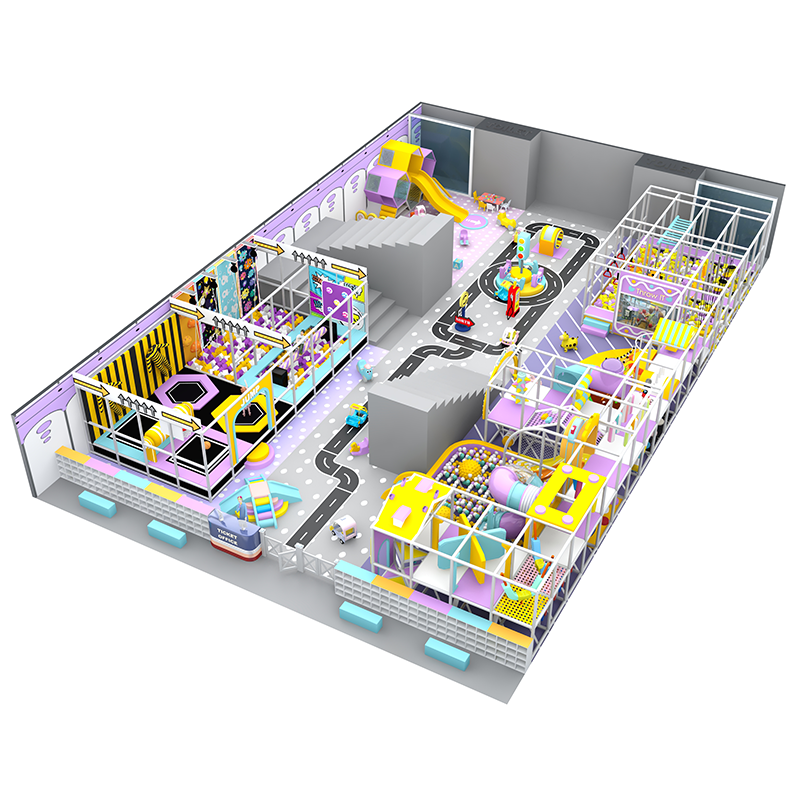
Designing an indoor playground is far more than selecting colorful equipment and arranging it within four walls. Every spatial decision, material choice, and layout configuration directly shapes how children move, interact, and stay safe within a confined environment. When designers and facility operators understand the relationship between physical structure and child behavior, they can create spaces that genuinely support development while minimizing risk. The challenge lies in balancing stimulation with structure, freedom with boundaries, and creativity with compliance.
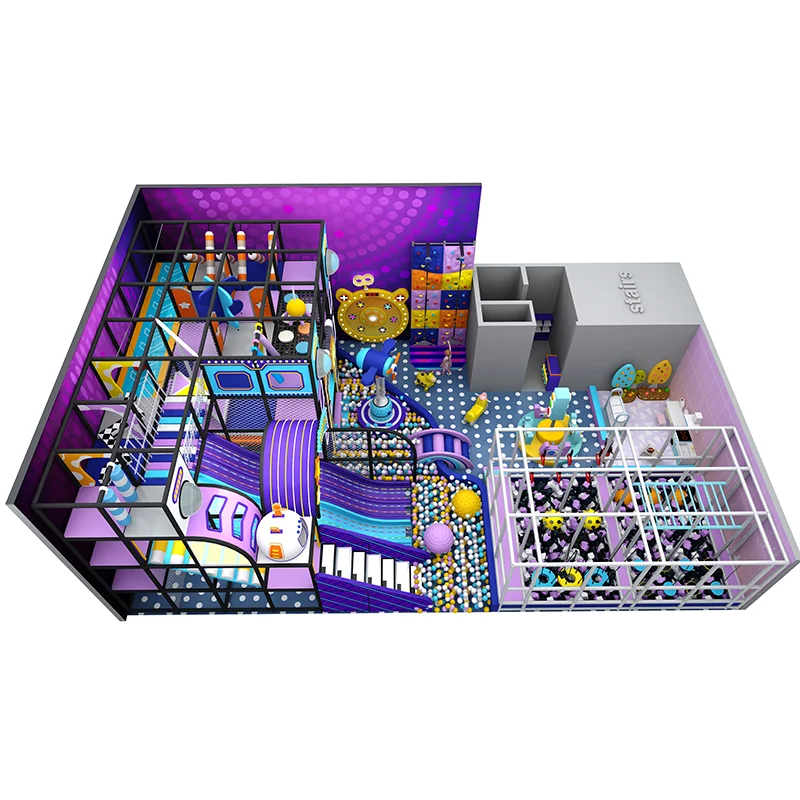
An indoor playground operates within a fundamentally different set of constraints compared to outdoor play areas. Limited square footage, enclosed airflow, acoustic dynamics, and the concentration of multiple age groups in a shared space all demand a more deliberate design approach. When these factors are addressed systematically, the result is an indoor playground that not only meets safety standards but actively encourages positive social interaction, physical engagement, and supervised independence. This article explores how thoughtful design decisions translate into measurable improvements in both safety outcomes and interactive play quality.
Understanding the Relationship Between Layout and Child Safety
Spatial Zoning as a Safety Foundation
One of the most effective safety strategies in indoor playground design is the deliberate zoning of activity areas by age group and activity intensity. When toddler zones are physically separated from areas designed for older children, the risk of collision, accidental impact, and equipment misuse drops significantly. Clear visual and physical boundaries — achieved through low partition walls, flooring transitions, or equipment placement — guide children and caregivers toward appropriate zones without requiring constant verbal redirection.
Zoning also supports supervision efficiency. When an indoor playground is organized so that sightlines remain open across multiple zones, a small number of staff members can monitor a large number of children simultaneously. This is particularly important in high-capacity facilities where the ratio of supervisors to children may be stretched. A well-zoned layout turns the physical environment itself into a passive safety tool.
Beyond age separation, activity intensity zoning matters. High-energy climbing and sliding areas benefit from buffer zones that prevent children from running directly into active play structures. Quieter creative or sensory zones placed at the perimeter of the indoor playground reduce the likelihood of overstimulation and allow children who need a break to decompress without leaving the facility entirely.
Traffic Flow and Congestion Control
In any confined environment, the way people move through a space determines how safely they can do so. An indoor playground with poorly planned entry and exit points creates bottlenecks that increase the risk of falls, collisions, and panic during emergencies. Designers must map anticipated traffic patterns before finalizing equipment placement, ensuring that natural movement corridors remain clear and wide enough for children running at full speed.
Entry and exit points to individual play structures deserve particular attention. Slides, tunnels, and climbing frames each generate predictable movement patterns. When the landing zone of a slide is positioned too close to the base of a climbing ladder, children exiting and children entering will inevitably conflict. Spacing these transition points with adequate clearance — and using flooring color or texture changes to signal them — reduces incident frequency without requiring additional signage or staff intervention.
Circulation paths within the indoor playground should also account for adult movement. Parents and caregivers who need to reach a child quickly must be able to do so without climbing over equipment or navigating dead ends. Designing wide, accessible pathways alongside play structures ensures that adult intervention, when needed, can happen swiftly and safely.
How Design Elements Encourage Positive Social Interaction
Collaborative Play Structures and Shared Equipment
The physical configuration of an indoor playground has a direct influence on whether children play alongside each other or with each other. Equipment that requires or rewards cooperation — such as multi-user climbing nets, shared sensory panels, or group activity stations — naturally draws children into collaborative engagement. When these structures are placed at the social heart of the indoor playground rather than at its edges, they become focal points that attract mixed groups and encourage spontaneous interaction.
The scale of equipment also matters. Structures that are large enough for several children to occupy simultaneously create opportunities for negotiation, role-playing, and shared decision-making. A single-user slide encourages sequential, individual play. A multi-level play tower with multiple access points and activity options encourages children to inhabit the same space, communicate, and coordinate. This distinction is subtle in design terms but significant in developmental outcomes.
Designers of indoor playground environments increasingly incorporate open-ended elements — movable components, sensory materials, or reconfigurable panels — that invite children to create their own play scenarios. These elements are particularly effective at sustaining interaction over longer visits, as they prevent the rapid boredom that fixed, single-function equipment can produce in repeat visitors.
Sightlines, Openness, and Social Confidence
Children are more likely to approach and engage with peers when they can observe the social environment before entering it. An indoor playground that uses semi-transparent barriers, open-sided structures, and varied elevation levels allows children to watch ongoing play from a safe vantage point before deciding to join. This design principle supports children who are naturally more cautious or who are visiting the indoor playground for the first time.
Elevated platforms and lookout points serve a dual purpose. They satisfy the developmental drive to survey one's environment from above, and they create natural gathering spots where children tend to pause, communicate, and form temporary social groups. When these elevated elements are connected by bridges, tunnels, or climbing paths, they become nodes in a social network that the indoor playground's physical structure makes possible.
Acoustic design is an often-overlooked dimension of social interaction in confined play environments. Excessive noise reverberation in an indoor playground can make verbal communication difficult, which discourages conversation and cooperative play. Sound-absorbing materials on walls and ceilings, combined with strategic placement of quieter activity zones, help maintain a noise level that supports rather than overwhelms social engagement.
Material Selection and Its Impact on Safety Performance
Flooring Systems and Impact Attenuation
The flooring of an indoor playground is its most critical passive safety component. Falls are the most common cause of injury in play environments, and the severity of those injuries is directly determined by the surface onto which a child lands. Engineered foam tiles, rubber matting, and poured-in-place rubber surfaces each offer different levels of impact attenuation, and the appropriate choice depends on the fall height of adjacent equipment and the expected intensity of use.
Beyond impact performance, flooring materials in an indoor playground must resist moisture, support easy cleaning, and maintain their safety properties over years of heavy use. A surface that performs well when new but compresses and loses resilience after six months of operation creates a false sense of security. Specifying materials with documented long-term performance data is essential for facilities that operate at high capacity.
Flooring transitions between zones also carry safety implications. A sudden change in surface height or texture can cause trips, particularly for younger children who are still developing their gait and balance. Flush transitions, beveled edges, and consistent surface heights across the indoor playground reduce this risk while also improving accessibility for children with mobility differences.
Structural Materials and Durability Under Load
The structural integrity of an indoor playground depends on the quality and specification of its primary materials. Galvanized steel pipe frameworks offer corrosion resistance and high load-bearing capacity, making them well-suited to multi-level play structures that must support the simultaneous weight of many children. High-density polyethylene panels provide impact resistance, UV stability in naturally lit spaces, and resistance to the surface degradation that comes from constant contact with small hands and feet.
Connection points and fasteners deserve as much attention as primary structural members. Loose bolts, worn connectors, and degraded welds are among the most common sources of structural failure in play equipment. An indoor playground designed with accessible inspection points and standardized hardware makes routine maintenance faster and more reliable, which directly supports ongoing safety performance.
Material selection also influences the sensory experience of the indoor playground. Smooth, rounded edges on all accessible surfaces prevent abrasion injuries. Non-toxic coatings and finishes protect children who mouth surfaces or have skin sensitivities. These details may seem minor in isolation, but collectively they define the safety profile of the environment across thousands of daily interactions.
Supervision Design and Passive Safety Integration
Designing for Supervisory Efficiency
An indoor playground that is difficult to supervise is inherently less safe, regardless of how well its individual components are engineered. Supervision design means configuring the layout so that staff can maintain visual contact with all active zones from a minimal number of fixed positions. This requires eliminating blind spots created by tall equipment, opaque barriers, or poorly considered structural placement.
Elevated supervisor stations positioned at strategic points within the indoor playground allow staff to observe multiple zones simultaneously without constant movement. When these stations are integrated into the design rather than added as afterthoughts, they become natural focal points that children and caregivers recognize as points of authority and assistance. This visibility also has a behavioral effect — children who are aware of being observed tend to moderate risk-taking behavior.
Entry control is another dimension of supervision design. A single, clearly defined entry and exit point for the indoor playground allows staff to monitor who enters and exits, verify age-appropriate zone access, and respond quickly to a child attempting to leave unaccompanied. This is particularly important in facilities that serve mixed age groups or that operate in high-footfall commercial environments such as shopping centers.
Passive Safety Features Embedded in Design
Passive safety features are those that protect children without requiring active intervention from staff or caregivers. In an indoor playground, these include rounded corners on all structural elements, enclosed or guarded openings that prevent entrapment, non-slip surfaces on all climbing and walking areas, and fall barriers at all elevated platforms above a defined height threshold.
Entrapment prevention is a specific and critical concern in confined play environments. Openings in nets, barriers, and structural panels must be sized to either prevent a child's head from entering entirely or allow it to pass through completely — the dangerous middle range where a head can enter but not exit must be eliminated by design. This principle applies to every opening in the indoor playground, from decorative cutouts to functional access points.
Lighting design contributes to passive safety in ways that are easy to underestimate. An indoor playground with consistent, glare-free illumination across all zones reduces the visual confusion that can cause children to misjudge distances or miss obstacles. Emergency lighting that activates automatically during power interruptions ensures that evacuation can proceed safely even in unexpected circumstances.
Adapting Indoor Playground Design for High-Capacity Environments
Density Management and Play Quality
High-capacity indoor playground facilities face a specific design challenge: maintaining safety and interaction quality when the space is operating at or near its maximum occupancy. At high density, the risk of collision increases, social dynamics become more complex, and the wear on equipment accelerates. Design strategies that work well at low occupancy may fail under peak conditions if they have not been stress-tested against realistic usage scenarios.
One effective approach is to design the indoor playground with multiple parallel activity circuits rather than a single linear flow. When children have several equivalent routes through the space, peak-hour congestion distributes more evenly across the facility. This reduces the formation of queues at popular equipment, which are a common source of conflict and frustration in high-capacity environments.
Equipment selection for high-capacity indoor playground facilities should prioritize structures that can accommodate multiple simultaneous users without compromising safety. Multi-entry climbing structures, wide slides, and large-format sensory walls serve more children per unit of floor space than single-user alternatives, improving both throughput and the overall play experience during busy periods.
Maintenance Planning as a Design Discipline
The long-term safety of an indoor playground is inseparable from the ease with which it can be maintained. Facilities that are difficult to clean, inspect, or repair will inevitably accumulate deferred maintenance, and deferred maintenance in a play environment translates directly into elevated injury risk. Designing for maintainability means specifying materials that can be cleaned with standard commercial products, ensuring that all structural connection points are accessible without specialized tools, and selecting finishes that show wear visibly so that degradation is caught early.
Modular design approaches allow sections of an indoor playground to be taken out of service for maintenance or replacement without closing the entire facility. This is particularly valuable for high-capacity operations where revenue loss from full closure is significant. When individual play modules can be isolated, inspected, and replaced independently, the facility can maintain a higher standard of ongoing safety without the operational disruption of complete shutdowns.
Documentation systems that track inspection dates, identified issues, and completed repairs create an auditable safety record for the indoor playground. This record is valuable not only for internal quality management but also for demonstrating compliance to insurers, regulators, and the families who use the facility. A well-maintained indoor playground communicates professionalism and care in ways that directly influence customer trust and repeat visitation.
FAQ
What are the most important safety standards that apply to indoor playground design?
Indoor playground facilities are typically subject to standards such as ASTM F1918 for soft contained play equipment and EN 1176 in European markets, which cover structural integrity, entrapment prevention, fall height requirements, and surface impact attenuation. Compliance with these standards provides a baseline, but many well-designed facilities exceed minimum requirements by applying additional engineering judgment to their specific layout and user demographics. Always verify which standards apply in your jurisdiction before finalizing a design.
How does the size of an indoor playground affect the design approach for interaction?
Smaller indoor playground environments require more deliberate zoning and equipment selection to ensure that children of different ages and activity levels can coexist safely. In compact spaces, multi-functional equipment that supports both active and quieter play helps maximize the social value of limited square footage. Larger facilities have more flexibility to create distinct zones and parallel circuits, but they require more careful supervision planning to ensure that no area becomes a blind spot.
Can an indoor playground be designed to support children with different developmental needs?
Yes. Inclusive indoor playground design incorporates sensory-rich elements for children who benefit from tactile and auditory stimulation, low-threshold access points for children with limited mobility, and quieter retreat zones for children who experience sensory overload. Equipment with varied difficulty levels allows children with different physical capabilities to engage with the same structures at their own pace. Inclusive design benefits all users by creating a more flexible and welcoming environment.
How often should an indoor playground be inspected to maintain safety standards?
Most safety guidelines recommend a combination of daily visual inspections by trained staff, monthly operational inspections that check for wear and fastener integrity, and annual comprehensive inspections by a qualified third-party inspector. High-capacity indoor playground facilities that operate seven days a week may benefit from more frequent formal inspections given the accelerated wear their equipment experiences. Inspection frequency should be documented and adjusted based on observed wear patterns and incident history.
Table of Contents
- Understanding the Relationship Between Layout and Child Safety
- How Design Elements Encourage Positive Social Interaction
- Material Selection and Its Impact on Safety Performance
- Supervision Design and Passive Safety Integration
- Adapting Indoor Playground Design for High-Capacity Environments
-
FAQ
- What are the most important safety standards that apply to indoor playground design?
- How does the size of an indoor playground affect the design approach for interaction?
- Can an indoor playground be designed to support children with different developmental needs?
- How often should an indoor playground be inspected to maintain safety standards?