
 EN
EN


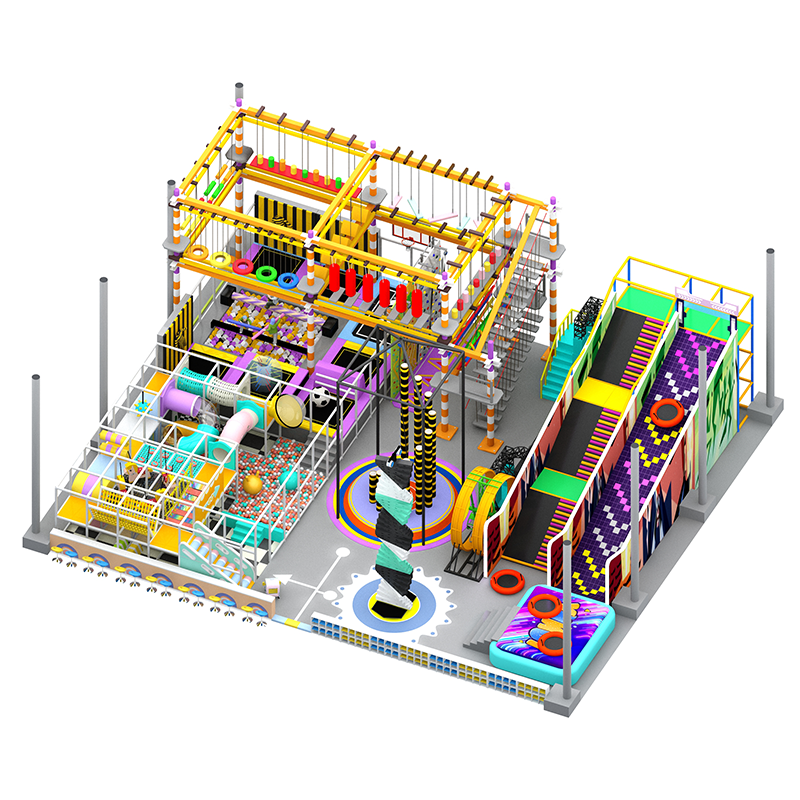
A well-designed kids playground is far more than a place for children to burn off energy after school. It is a carefully engineered environment that shapes how young bodies grow, how young minds develop, and how children learn to navigate the social world around them. From the angle of a slide to the height of a climbing wall, every design decision in a kids playground carries developmental weight, influencing muscle strength, coordination, risk assessment, and cooperative play in ways that structured classroom time simply cannot replicate.
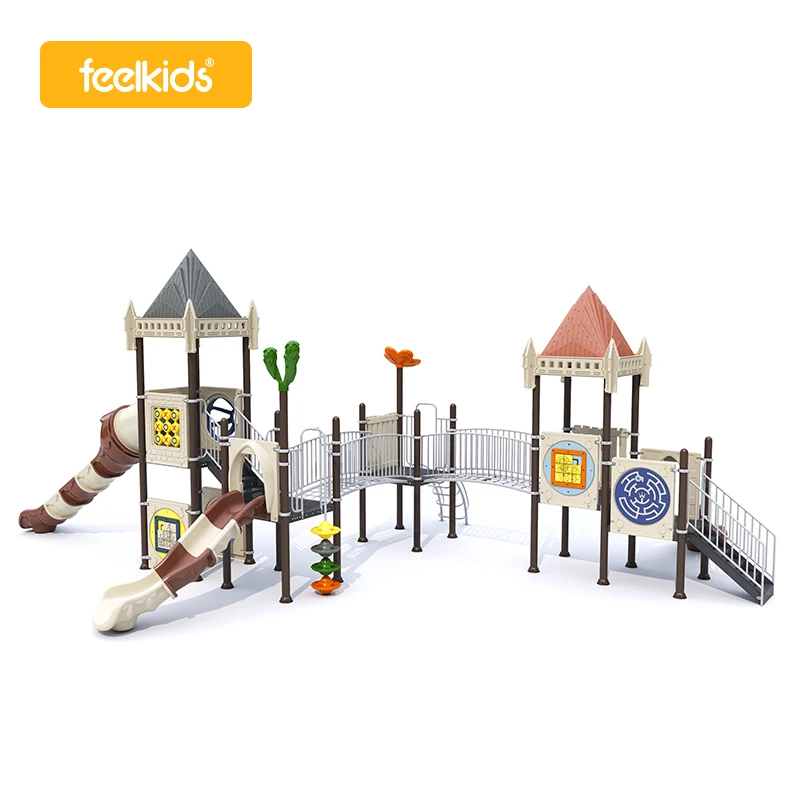
Understanding how kids playground design supports development requires looking beneath the surface of colorful equipment and open spaces. It demands an appreciation of child psychology, developmental science, and spatial design principles that together create environments where children not only play but genuinely grow. This article explores the mechanisms through which thoughtful kids playground design contributes to physical development and social interaction, offering practical insight for parents, educators, facility planners, and procurement professionals seeking the most developmentally effective outdoor environments.
The Developmental Science Behind Kids Playground Design
How Physical Structures Stimulate Gross Motor Development
Gross motor development refers to the growth of large muscle groups and the neural pathways that control them, and a properly designed kids playground is one of the most effective tools available for stimulating this development. When children climb, swing, balance, and slide, they are actively recruiting major muscle groups across the legs, core, arms, and back, building strength and endurance in ways that feel entirely natural and self-motivated. Unlike repetitive gym exercises, kids playground activities engage multiple muscle systems simultaneously because each movement requires coordination across the entire body.
Research in pediatric health consistently shows that children who have regular access to a well-equipped kids playground demonstrate stronger grip strength, better postural control, and improved cardiovascular fitness compared to those with limited outdoor play opportunities. Climbing structures, in particular, require children to shift their body weight, assess handholds, and execute coordinated movements that challenge and strengthen the musculoskeletal system progressively. The variety of physical challenges available on a modern kids playground ensures that different muscle groups are engaged across sessions, preventing the plateaus that can occur in more structured physical education programs.
Equipment like the kids playground multi-activity center, which combines slides, climbing boards, and physical challenge components, exemplifies how integrated design can target multiple aspects of gross motor development within a single play structure. Children naturally move from one component to the next, sustaining elevated physical activity without experiencing the motivation fatigue that structured exercise can sometimes produce.
Fine Motor Skills and Sensory Integration Through Play
While gross motor development often receives the most attention in discussions about kids playground design, the contribution to fine motor skills and sensory integration is equally significant. Gripping textured surfaces, manipulating moving parts, maintaining finger tension on rope nets, and pressing against resistance panels all engage the smaller muscles of the hands and fingers that are critical for tasks like writing, drawing, and tool use. A thoughtfully designed kids playground incorporates a range of surface textures and interactive elements that naturally stimulate fine motor pathways.
Sensory integration is the brain's ability to process and organize information received from multiple sensory systems simultaneously, and play environments are uniquely powerful at developing this capacity. The vestibular system, which governs balance and spatial orientation, is activated constantly in a kids playground setting as children swing, spin, and navigate uneven surfaces. Proprioceptive input, which tells the brain where the body is in space, is strengthened through activities that involve pushing, pulling, and carrying body weight against resistance. These sensory experiences are not incidental to play but are core to why outdoor play environments produce lasting developmental benefits.
Social Architecture: How Playground Layout Shapes Interaction
Space Planning That Encourages Cooperative Play
The physical layout of a kids playground has a direct and measurable impact on the quality and frequency of social interaction among children. Designers who understand developmental psychology know that how space is organized determines whether children will play alongside each other in parallel or engage in genuinely cooperative and imaginative group play. Open, undifferentiated spaces tend to encourage individual or small-group activity, while multi-level structures with shared platforms, tunnels, and accessible bridge connections naturally create opportunities for collaborative navigation and role-based play.
When a kids playground includes shared decision points, such as a platform that multiple children must negotiate together or a structure that requires one child to support another, the design itself becomes a catalyst for communication, negotiation, and empathy development. These are not skills that can be easily taught in isolation; they emerge organically when children are placed in environments that make cooperation both necessary and rewarding. Planners and procurement teams seeking maximum social developmental return should evaluate kids playground designs based on how many natural opportunities for collaborative interaction they create per unit area.
A key design principle is the creation of semi-enclosed social zones within the broader kids playground structure. Tunnels, canopied platforms, and enclosed play panels give children spaces where they can gather, observe the broader environment, and engage in imaginative conversation without feeling exposed. These zones act as social incubators, particularly for younger or more introverted children who benefit from a defined, manageable social space before engaging with larger groups.
Inclusive Design and Social Integration
A truly effective kids playground embraces inclusive design principles that allow children of varying physical abilities, sensory profiles, and developmental stages to participate meaningfully in the same play environment. When children with different abilities can access and enjoy the same structures, the social benefits extend beyond inclusion in the abstract sense. Children without disabilities develop empathy and adaptive communication skills, while children with physical or developmental challenges gain confidence and peer relationships that support their broader social development.
Inclusive kids playground design typically involves graduated challenge levels within the same structure, accessible entry points at ground level, and sensory-rich elements that engage children who may be less drawn to high-energy physical play. When these features are integrated thoughtfully rather than added as afterthoughts, the entire play environment benefits from greater diversity of play styles and interaction patterns. Procurement professionals evaluating kids playground systems for public parks, schools, or community centers should prioritize designs that build inclusivity into the structural logic from the start.
Age-Specific Design Considerations in Kids Playground Planning
Matching Equipment Complexity to Developmental Stage
One of the most important principles in kids playground design is the alignment between equipment complexity and the developmental stage of the intended users. Toddlers and preschool-age children benefit most from low-to-ground equipment, simple climbing features, and sensory play panels that encourage exploration without demanding the motor precision or risk judgment that older children develop gradually. Equipment designed for this age range should allow caregivers to remain close and should minimize fall heights while still providing genuine physical challenge and sensory stimulation.
For school-age children, the calculus shifts considerably. This age group benefits from a kids playground that introduces genuine physical risk in a controlled environment, with features like higher climbing structures, more complex balance challenges, and equipment that rewards persistence and physical courage. The experience of managing controlled risk on a kids playground, deciding whether to attempt a difficult climb, how to descend safely, and how to read one's own physical limits, is deeply connected to the development of executive function, self-regulation, and resilience.
Multi-Age Design and Developmental Continuity
Many high-performing kids playground installations serve mixed-age groups, and the most effective designs for these contexts create what developmental researchers call 'zones of proximal development' in a physical space. When older children can observe and demonstrate more advanced physical skills on the same structure that younger children are beginning to explore, the social dynamic itself becomes an accelerator of development. Younger children are motivated and guided by observing slightly older peers, while older children develop leadership, patience, and mentorship skills through interaction with younger users.
Multi-age kids playground design requires careful spatial zoning to ensure that the needs and safety of different age groups are respected without completely segregating the play experience. A common approach involves structuring the overall space so that the most physically demanding features are positioned in areas that naturally receive less traffic from very young children, while maintaining visual and social connectivity across the entire kids playground environment. This spatial intelligence is one of the hallmarks of professional-grade playground design.
Material Selection, Durability, and Safety in Developmental Playground Design
Why Material Choices Affect Both Safety and Play Quality
The materials used in kids playground construction directly affect both the physical safety of young users and the quality of their developmental experience. High-density polyethylene and UV-stabilized plastics, such as PE board used in quality activity center designs, offer surfaces that remain splinter-free, resist weathering, and maintain consistent texture across temperature ranges, all of which are important for sensory play and repeated physical contact. The tactile experience of playground surfaces is not trivial; children interact with equipment surfaces constantly during play, and the quality of those surfaces shapes both comfort and engagement.
Steel components, when properly galvanized or powder-coated, provide the structural integrity needed for climbing and load-bearing elements in a kids playground. The weight distribution and rigidity of structural materials also influence the physical feedback children receive during play, affecting how effectively the equipment builds proprioceptive awareness and strength. Procurement teams should evaluate kids playground materials not only against safety certification standards but also against the developmental value of the sensory and physical feedback those materials provide.
Maintenance, Longevity, and Sustained Developmental Value
The developmental benefits of a kids playground are not delivered in a single season but accumulate over years of consistent access and use. This makes material durability and maintenance requirements critically important commercial considerations for schools, municipalities, and commercial operators. A kids playground that deteriorates quickly, develops sharp edges, or loses structural integrity within a few years represents not only a financial loss but a developmental loss, removing children's access to a proven growth environment before that environment has delivered its full value.
Well-designed kids playground systems use materials and connection hardware selected specifically for long-term performance in outdoor environments subject to UV exposure, precipitation, temperature cycling, and the cumulative mechanical stress of thousands of young users. Modular designs that allow individual components to be replaced without full structural overhaul represent the most cost-effective approach to sustained developmental value, allowing facilities to maintain a fully functional and safe kids playground environment without incurring the full cost of replacement each time a component reaches end of life.
FAQ
What age range benefits most from a well-designed kids playground?
Children between the ages of two and twelve benefit most comprehensively from access to a well-designed kids playground, though the specific features that deliver the greatest developmental value differ by age. Toddlers gain most from sensory-rich, low-height exploration structures, while school-age children benefit from complex physical challenges, social interaction opportunities, and graduated risk features. Multi-age kids playground designs that serve this full range through intelligent spatial zoning deliver the broadest cumulative developmental return.
How does kids playground equipment contribute to social skills development?
A kids playground contributes to social skills development by creating natural situations in which children must communicate, cooperate, negotiate, and empathize with peers. Shared platforms, collaborative physical challenges, and semi-enclosed social gathering zones all create contexts in which social learning occurs organically. Unlike structured classroom social activities, kids playground interactions are self-directed, making the social learning more intrinsically motivated and therefore more deeply retained.
What safety standards should a kids playground meet for school or public park use?
A kids playground intended for school or public park installation should comply with relevant national and international safety standards governing fall height, surface impact attenuation, entrapment hazard dimensions, and structural load capacity. In many markets, compliance with standards such as EN 1176 in Europe or ASTM F1487 in the United States is a baseline requirement for public installation. Beyond certification compliance, a quality kids playground should be evaluated on the ongoing safety of its materials under weathering conditions and the accessibility of replacement parts for maintenance.
How should procurement teams evaluate kids playground designs for maximum developmental impact?
Procurement teams should evaluate kids playground designs against developmental criteria including the variety of physical challenges offered, the range of sensory experiences supported, the inclusivity of access and challenge levels, and the quality of social interaction the spatial layout naturally encourages. Material durability, maintenance burden, and the availability of modular replacement components are also critical commercial factors that affect the long-term developmental return on investment. Consulting with child development specialists alongside equipment suppliers can help ensure that the selected kids playground system genuinely serves its developmental mission over its full operational lifespan.
Table of Contents
- The Developmental Science Behind Kids Playground Design
- Social Architecture: How Playground Layout Shapes Interaction
- Age-Specific Design Considerations in Kids Playground Planning
- Material Selection, Durability, and Safety in Developmental Playground Design
-
FAQ
- What age range benefits most from a well-designed kids playground?
- How does kids playground equipment contribute to social skills development?
- What safety standards should a kids playground meet for school or public park use?
- How should procurement teams evaluate kids playground designs for maximum developmental impact?