
 EN
EN


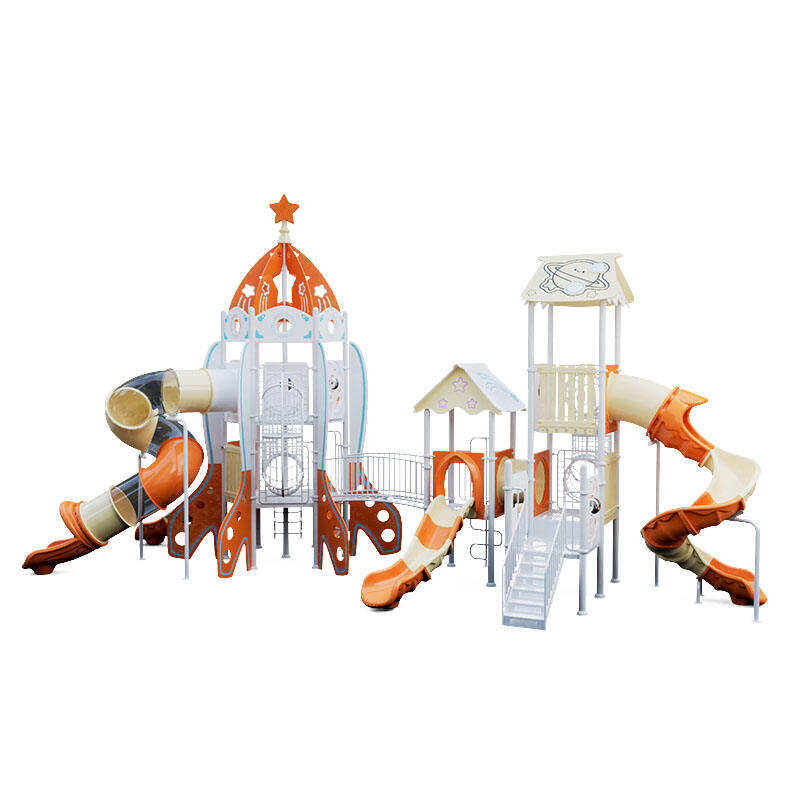
In a busy public park, the way an outdoor playground is arranged has a direct and measurable effect on how well the space functions for children and families alike. Layout decisions shape every aspect of the play experience — from how visitors enter and navigate the space to how long they stay and how safely they interact with equipment. When the design is thoughtful and intentional, the result is a space that feels open, organized, and genuinely enjoyable. When the layout is poorly conceived, even the highest-quality equipment can lead to congestion, hazards, and underused zones that frustrate parents and limit children's play time.
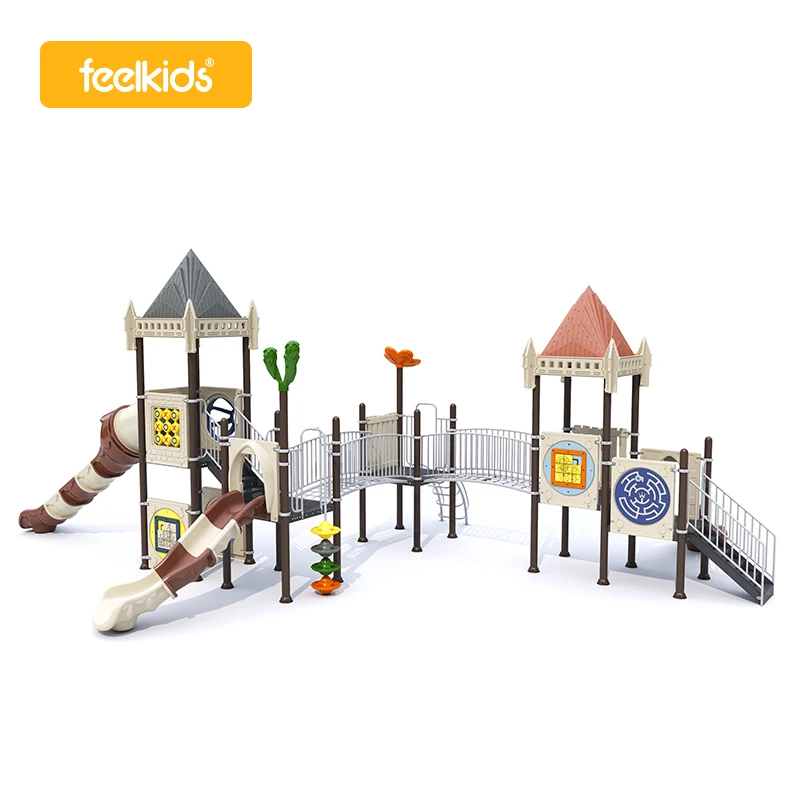
Understanding the relationship between spatial planning and usage efficiency is essential for park managers, municipal planners, and landscape architects who are responsible for designing or upgrading an outdoor playground in a high-traffic environment. This article examines the specific mechanisms through which layout influences traffic flow, equipment utilization, visitor satisfaction, and operational sustainability — providing actionable insight for anyone working to maximize the value of an outdoor playground investment.
The Foundation of Effective Outdoor Playground Layout
Entry and Exit Point Strategy
The placement of entry and exit points is one of the most consequential layout decisions in any outdoor playground design. When access points are positioned without careful consideration of surrounding pedestrian paths, bottlenecks form quickly during peak hours. Families carrying strollers, children running ahead, and older visitors walking at a slower pace all converge at these thresholds — and poor positioning amplifies conflict between these groups.
An effective outdoor playground should have at least two clearly defined access corridors, oriented in alignment with the park's main foot traffic routes. This allows visitors to flow in and out without reversing against the natural movement of others. Entry zones should be wide enough to accommodate simultaneous two-way movement and should be visually distinct so that first-time visitors immediately understand where to go.
Designers who treat entry planning as an afterthought often find that the outdoor playground becomes self-defeating at its busiest moments. The very conditions that indicate success — high visitor numbers — create the worst experience when ingress and egress have not been optimized.
Zoning by Age Group and Activity Type
A well-designed outdoor playground separates activity zones by the physical demands and behavioral patterns of different age groups. Toddler zones, school-age climbing areas, and active adventure sections each attract different types of movement — and when these are layered on top of each other, both safety and efficiency suffer. Children running between climbing structures will naturally collide with younger children engaged in slower, exploratory play if the two zones are not buffered from one another.
Effective zoning does more than separate age groups — it also assigns equipment clusters according to activity intensity. High-energy equipment such as slides, climbing walls, and balance beams should be grouped in a section with generous open space around it to absorb the movement patterns of active play. Quieter equipment, such as sensory panels and smaller activity structures, should be set back from the high-traffic core to allow focused engagement without interference.
When an outdoor playground uses clear zoning logic, usage efficiency improves significantly. Children intuitively gravitate toward the section appropriate for their age and energy level, reducing the random wandering and equipment conflicts that waste both space and time. Park operators also find that maintenance is easier when similar equipment types are co-located, reducing the logistical complexity of inspection rounds.
Traffic Flow Dynamics Within the Play Space
Circulation Paths and Informal Routing
Traffic flow within an outdoor playground is rarely random. Children and their caregivers tend to follow predictable patterns based on visibility, equipment placement, and social clustering. If the layout does not account for these natural tendencies, informal paths form across soft-fall surfaces, creating wear patterns that compromise safety and aesthetics over time.
Intentional circulation paths — even informal ones defined by surfacing transitions or low planting borders — guide movement without restricting it. By channeling foot traffic along predictable corridors, the layout reduces the likelihood of high-speed collisions in central areas and creates natural buffer zones between equipment clusters. These paths also make it easier for supervising adults to maintain sightlines across the outdoor playground without having to reposition constantly.
The spacing between equipment is a critical variable in this equation. When structures are placed too close together, children cannot build up the running momentum needed for physical play without immediately entering another equipment zone. When spacing is too generous, the outdoor playground feels sparse and underused. Striking the right balance requires understanding the likely volume of simultaneous users and planning spacing accordingly.
Sightlines and Supervisory Efficiency
One of the most underappreciated aspects of outdoor playground layout is its effect on supervisory efficiency. When caregivers can see all active play zones from one or two fixed vantage points, the overall experience of visiting the park becomes significantly less stressful. This encourages longer visits, more relaxed engagement, and a stronger sense of community among families who regularly use the space.
Layouts that obstruct sightlines — whether through tall equipment clusters, dense plantings, or poor orientation of structures — force caregivers to move constantly and create anxiety about unseen activity. This directly reduces the time families are willing to spend at the outdoor playground, lowering overall usage efficiency even when physical capacity is not a constraint.
The positioning of seating areas is closely linked to sightline planning. Benches and shaded rest zones should be positioned so that they offer unobstructed views of the most active play areas. When seating and sightlines are well-aligned, caregivers are more likely to stay seated and relaxed, reducing their footprint within the active play area and freeing up circulation space for children.
Equipment Placement and Usage Distribution
Anchor Equipment and Its Role in Drawing Traffic
Every outdoor playground benefits from one or two 'anchor' pieces of equipment that draw the highest volume of attention and usage. These are typically the largest, most visually striking structures — multi-play activity centers, tall slides, or climbing towers. Their placement within the overall layout has a cascading effect on how all surrounding equipment performs.
When anchor equipment is placed at the geographic center of the outdoor playground, it tends to create a crowded core with underused periphery. Children and families cluster around the central attraction and largely ignore equipment at the edges. A more effective approach places anchor equipment toward the rear or side of the space, drawing visitors deeper into the layout and distributing usage more evenly across all zones.
This principle also applies to the visual relationship between equipment pieces. An outdoor playground where every structure is visible from the entrance creates a sense of 'seeing everything at once,' which can reduce exploration and shorten visit duration. Layouts that introduce equipment gradually — with each zone revealing new options as visitors move through the space — encourage longer, more thorough engagement and higher utilization rates across all equipment.
Balancing High-Demand and Low-Demand Equipment
In any busy outdoor playground, some equipment will always attract more users than others. Slides, swings, and climbing structures consistently rank as the most sought-after elements. Sensory panels, balance paths, and quiet interactive features tend to see lower demand. The layout must account for this imbalance to prevent bottlenecks at high-demand items while maintaining a consistent overall usage rate across the installation.
One effective strategy is to position high-demand equipment adjacent to transition spaces where children naturally pause between activities. This creates a 'waiting buffer' that absorbs queue pressure without generating a formal line. When children waiting for a slide have an immediately adjacent activity to engage with, the perceived wait time drops significantly — improving satisfaction without requiring additional equipment investment.
The outdoor playground layout should also consider the directional flow between high-demand items. If two popular structures are placed facing each other, children exiting one will immediately be heading toward the other, creating a concentrated bidirectional traffic stream. Positioning these items at oblique angles to one another encourages a more distributed movement pattern across the play space.
Environmental Integration and Seasonal Usage Efficiency
Shade, Surface, and Weather-Resilient Planning
An outdoor playground that is unusable during hot summer afternoons or wet autumn days is an inefficient investment regardless of how well the equipment itself is designed. Environmental integration — the strategic use of shade structures, surface materials, and drainage planning — extends the usable hours and seasons of the installation, directly improving the return on every square meter of play space.
Shade placement should correspond with the highest-use zones and the orientation of the sun during peak park hours. An outdoor playground that receives direct afternoon sun on its most popular equipment will see usage drop sharply during the hottest part of the day. Incorporating shade sails, pergola structures, or strategically planted trees in alignment with equipment zones reduces this effect and maintains consistent usage throughout the day.
Surface materials also play a significant role in traffic flow management. Rubber safety surfaces, engineered wood fiber, and poured-in-place options each have different drainage characteristics, maintenance demands, and impact on foot traffic speed. The choice of surfacing in different zones should reflect the intensity of expected use and the need to channel movement in specific directions. Transition strips between surface types serve a dual function — improving safety and subtly guiding pedestrian flow.
Adapting Layout for Seasonal Peak Usage
Busy parks often experience dramatic swings in outdoor playground usage between seasons. Summer holidays, school breaks, and weekends can bring visitor numbers three to five times higher than average weekday usage. A layout that performs well under normal conditions may become genuinely chaotic under these peak-load scenarios if it has not been designed with scalability in mind.
Flexible open space adjacent to equipment clusters serves as a natural pressure valve during high-demand periods. Children who cannot immediately access a specific piece of equipment will use this open space for spontaneous group play — turning apparent inefficiency into supplementary engagement. Parks that eliminate all open space in favor of maximum equipment density often find that the outdoor playground becomes harder to manage under peak load, not easier.
Seasonal layout adaptation can also be supported through modular equipment strategies. An outdoor playground that allows for the addition of temporary structures or activity stations during peak seasons gives park managers the flexibility to match supply with demand without committing to permanent infrastructure changes. This approach is increasingly popular in well-managed municipal parks where usage data informs annual layout adjustments.
FAQ
How much open space should be included in an outdoor playground layout?
A general guideline is that open circulation and buffer space should account for at least 30 to 40 percent of the total outdoor playground footprint. This ensures that children can move freely between equipment, reduces collision risk, and provides space for informal play during peak usage periods. The exact proportion should be adjusted based on expected visitor volume and the physical intensity of the equipment installed.
Does equipment placement affect how long children stay at the outdoor playground?
Yes, significantly. Layouts that encourage exploration — where not all equipment is visible from the entrance — tend to produce longer visit durations. When children discover new activities progressively as they move through the outdoor playground, their engagement is sustained for longer periods. Conversely, layouts where everything is visible at a glance tend to produce shorter, more transactional visits with less diverse equipment usage.
What is the most common layout mistake in high-traffic outdoor playground designs?
The most frequent error is centralizing all high-demand equipment in one cluster. This creates a congested core while peripheral zones remain underused. A more effective approach distributes popular equipment across different areas of the outdoor playground, guiding visitors through the full space and balancing usage across all installed elements. This also reduces the stress on any single area's safety surface and maintenance schedule.
How does caregiver seating placement relate to outdoor playground traffic management?
Caregiver seating that is positioned within the active play zones forces adults to become an unintended obstacle in the circulation flow. Well-placed seating — positioned at the perimeter with clear sightlines into the outdoor playground — keeps adult foot traffic out of the active zones while maintaining supervision quality. This separation between active play space and passive observation space is one of the most effective tools for improving overall traffic flow in a busy park setting.
Table of Contents
- The Foundation of Effective Outdoor Playground Layout
- Traffic Flow Dynamics Within the Play Space
- Equipment Placement and Usage Distribution
- Environmental Integration and Seasonal Usage Efficiency
-
FAQ
- How much open space should be included in an outdoor playground layout?
- Does equipment placement affect how long children stay at the outdoor playground?
- What is the most common layout mistake in high-traffic outdoor playground designs?
- How does caregiver seating placement relate to outdoor playground traffic management?