
 EN
EN



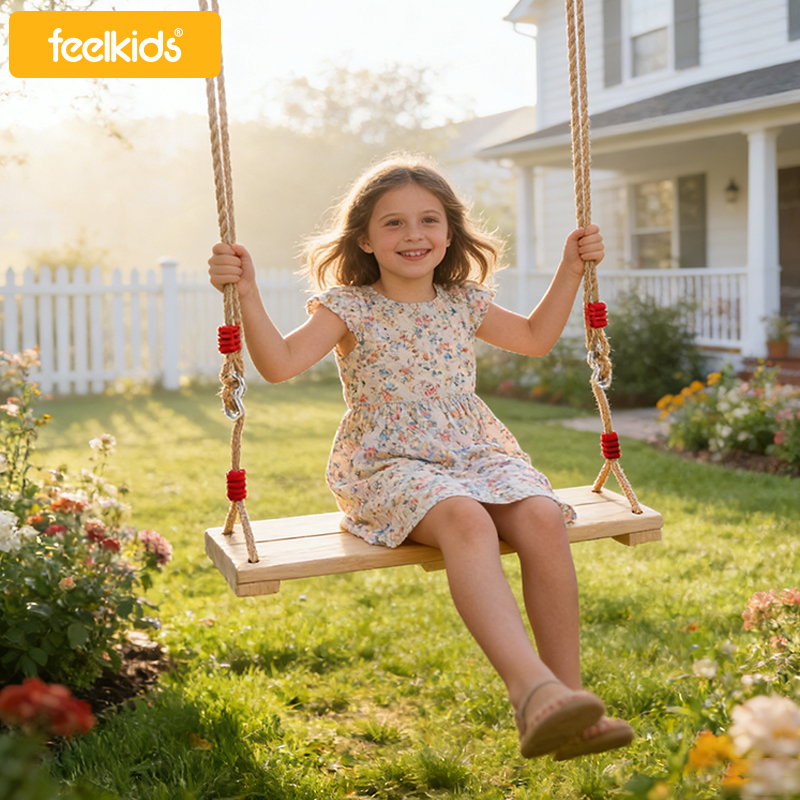
Load capacity represents one of the most critical yet often overlooked specifications when selecting an outdoor swing for your family, school, or community space. An outdoor swing must safely support users of varying weights and sizes, from small children to adults and teenagers. Understanding why load capacity matters in outdoor swing design goes far beyond simple safety compliance; it directly impacts durability, long-term value, user satisfaction, and liability management. When families or facility managers choose an outdoor swing without considering load capacity specifications, they expose themselves to equipment failure, injury risk, and premature replacement costs.
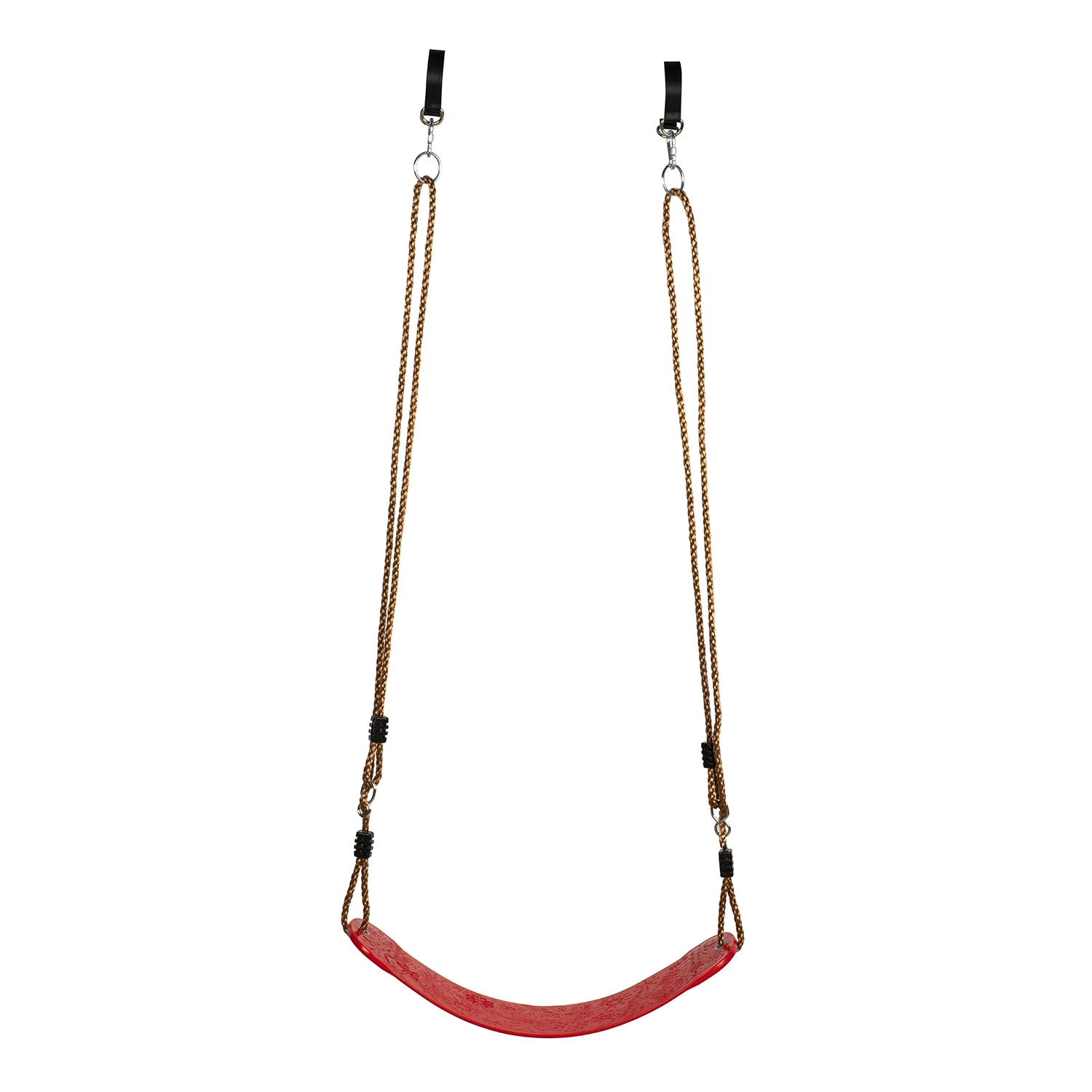
The design of an effective outdoor swing requires engineers and manufacturers to calculate precise load ratings based on material strength, frame geometry, suspension systems, and dynamic motion forces. An outdoor swing rated for only light-duty use will fail catastrophically if subjected to heavier users or sustained impact loads. Conversely, an oversized or unnecessarily heavy-duty outdoor swing may consume excess material, increase costs, and reduce accessibility for younger or smaller users. Proper load capacity in outdoor swing design ensures that equipment balances safety margins, cost efficiency, and inclusive access across all intended user groups.
The Safety Foundation of Load Capacity in Outdoor Swing Design
Understanding Dynamic Stress and Peak Forces
When a user swings on an outdoor swing, the forces acting on the frame and suspension far exceed the user's static weight. Dynamic stress occurs as the user pushes off, accelerates through the arc, and decelerates at the highest point of motion. An outdoor swing must withstand peak forces that can reach two to three times the user's body weight, depending on swing amplitude and pushing technique. Children tend to generate more erratic movement patterns and higher impact forces than adults, making load capacity calculations even more critical for an outdoor swing designed to serve mixed-age groups. Manufacturers of a quality outdoor swing apply safety factors of 4 to 8 times the maximum anticipated user weight to ensure that normal use never approaches the material's breaking point.
Material Failure and Progressive Degradation
An outdoor swing exposed to loads near or exceeding its rated capacity will experience accelerated material fatigue, metal corrosion, joint stress concentration, and chain or rope deterioration. Unlike a sudden catastrophic failure, an undersized outdoor swing often fails gradually through micro-fractures, deformation, and gradually weakening joints. This progressive degradation in an outdoor swing can go unnoticed until the equipment suddenly gives way during use. Proper load capacity margins in outdoor swing design prevent this scenario by ensuring that normal use remains well within the material's safe operating envelope. Facilities that regularly inspect their outdoor swing for signs of stress, sagging chains, or bent supports can catch problems early, but only if the equipment was designed with adequate load capacity from the start.
Serving Diverse User Groups Through Load Capacity Specification
Age and Weight Variation Across Users
A single outdoor swing installation at a school, park, or community center must accommodate children ranging from toddlers at 20 kg to teenagers at 80 kg or more. An outdoor swing designed for only the lighter end of this spectrum will fail when heavier children use it; one designed for adults alone may be unsafe for young children due to inadequate fall protection or seat geometry. Smart outdoor swing design addresses this diversity by specifying a load capacity range that covers the widest anticipated user population while maintaining appropriate safety factors at each extreme. Many facilities install multiple outdoor swing units with different specifications—toddler swings with lower capacity, standard child swings with mid-range capacity, and adult-rated swings—to ensure safe access for all user groups. The choice to include an outdoor swing with appropriate load capacity for each age segment significantly reduces injury rates and increases overall facility value.
Adult Use and Mixed-Age Environments
Modern parks and schools increasingly recognize that playgrounds serve not only children but also adults who push younger children, teenagers who enjoy swinging, and parents who participate in outdoor recreation. An outdoor swing rated only for children may fail when an adult pushes a child or sits to demonstrate usage. An outdoor swing that accommodates adult weights and the additional force input from pushing motion provides greater flexibility and safety across mixed-age settings. Load capacity specifications in an outdoor swing must therefore consider both direct user weight and indirect forces applied by caregivers, supervisors, and others interacting with the equipment. This inclusive approach to load capacity in outdoor swing design ensures that a single well-chosen unit can serve an entire community rather than requiring replacement or supplementation.
Long-Term Durability and Cost Implications of Load Capacity Design
Preventing Premature Equipment Failure and Replacement
An outdoor swing installed at a budget facility often undergoes higher-than-designed usage intensity due to popularity or inadequate maintenance staff to enforce rotation or rest periods. An outdoor swing specified with marginal load capacity will degrade rapidly under this realistic usage pattern, requiring replacement within two to five years. Conversely, an outdoor swing engineered with robust load capacity and appropriate safety factors may function reliably for ten to fifteen years with standard maintenance. The initial cost difference between a budget outdoor swing and a properly rated one is typically 20–40%, but the long-term cost per year of operation strongly favors the load-capacity-appropriate choice. Facility managers who calculate total cost of ownership—including installation, maintenance, and replacement cycles—consistently find that investing in an outdoor swing with adequate load capacity produces better financial outcomes and better user satisfaction.
Maintenance Intervals and Inspection Efficiency
An outdoor swing designed with excessive load margins can tolerate minor maintenance oversights and still remain safe, whereas one operating near its limits requires precise, frequent inspection. Load capacity specifications directly influence maintenance protocols for an outdoor swing; equipment rated for higher loads can tolerate slightly more wear before intervention becomes necessary. Staff managing an outdoor swing with known load capacity can prioritize inspection frequency and replacement schedules based on actual usage data. An outdoor swing with clearly documented load capacity also simplifies staff training, liability documentation, and incident response, since everyone understands the equipment's design envelope. Facilities that maintain this knowledge consistently experience fewer injuries, lower insurance claims, and higher user confidence in their outdoor recreation infrastructure.
FAQ
What happens if an outdoor swing is used beyond its rated load capacity?
Exceeding the rated load capacity of an outdoor swing accelerates material fatigue and failure risk. Components including chains, bolts, seat attachment points, and frame welds become overstressed and may crack, bend, or separate. Unlike gradual wear, an outdoor swing pushed beyond capacity often fails without visible warning, creating sudden injury hazard. Most manufacturers void warranty coverage when their outdoor swing is used outside specified load parameters, leaving facilities liable for resulting injuries and replacement costs.
How should load capacity for an outdoor swing be determined for mixed-age facilities?
Determining load capacity for an outdoor swing serving mixed ages requires identifying the heaviest anticipated user and adding appropriate safety factors—typically 4 to 8 times body weight to account for dynamic forces. An outdoor swing for a facility serving ages 2–18 should be rated for at least the weight of a heavy teenager plus safety margins. If an outdoor swing cannot safely accommodate heavier users, facilities should install separate units with different capacity ratings to serve each age group appropriately and avoid injuries from misuse.
Does a higher load capacity outdoor swing always cost significantly more?
A higher load capacity outdoor swing typically costs 20–40% more than a minimum-duty unit due to stronger materials and engineering. However, when amortized over the longer lifespan and lower maintenance cost of a properly rated outdoor swing, the cost per year of operation is often lower than cheaper alternatives. The outdoor swing investment should be evaluated on total cost of ownership, not initial purchase price alone, to make informed financial decisions.